

Workshop Explores Strategies to Improve Access to Government Services for Persons with Disabilities
- Update Time : Sunday, August 2, 2026
- 144 Time View
By Asma Parvin :
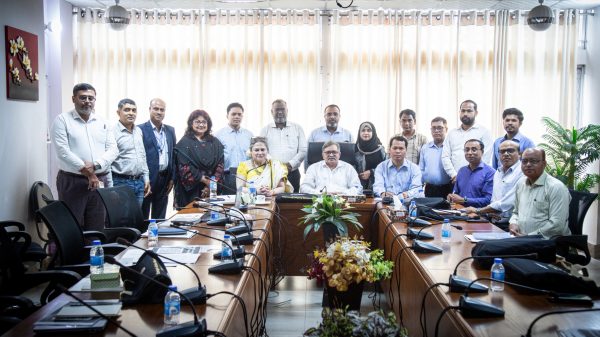
A special workshop was held in Dhaka to identify practical strategies for making government services more accessible and inclusive for persons with disabilities. ON Thursday 30July, the event took place at the National Foundation for the Development of Persons with Disabilities – NSFDP (aka Jatiyo Protibondhi Unnayan Foundation – JPUF) building and was jointly organised by the National Foundation for the Development of Persons with Disabilities and the social development organisation Friendship.
Although the Government has introduced a wide range of public welfare programmes, many services remain insufficiently accessible to persons with disabilities. The workshop brought together government officials and development practitioners to discuss ways to strengthen coordination and improve the delivery of disability-inclusive public services.
The workshop was inaugurated by Md Tarikul Alam, Managing Director of the National Foundation for the Development of Persons with Disabilities, as the Chief Guest. In his remarks, he emphasised the importance of ensuring needs-based services for persons with disabilities and expanding access to government services in remote and marginalised areas across Bangladesh. He also called for the effective implementation of the Rights and Protection of Persons with Disabilities Act, 2013 to strengthen disability inclusion nationwide.
The day-long workshop featured Barrister Ayesha Taasin Khan, Head of Inclusive Citizenship at Friendship, as the Special Guest. Through technical presentations and collaborative planning sessions, she highlighted the importance of an integrated action plan to strengthen rehabilitation services and ensure more effective implementation of inclusive government services for persons with disabilities.
The keynote presentation focused on applying the World Health Organization’s Community-Based Rehabilitation (CBR) approach to improve access to health, education, livelihoods and other essential services for persons with disabilities, particularly those living in remote and underserved communities. It also outlined the respective roles and responsibilities of the National Foundation for the Development of Persons with Disabilities, the Ministry of Social Welfare, local government institutions and Friendship in advancing disability-inclusive service delivery.
A key objective of the workshop was to promote the adoption of the WHO Community-Based Rehabilitation (CBR) framework. Participants also emphasised the need to activate five tiers of coordination committees spanning the national to local government levels and to strengthen collaboration among JPUF, Friendship, local government institutions and relevant government agencies. They further underscored the importance of identifying priority areas where Friendship can provide technical assistance to expand disability-inclusive services across the country.
Among those attending the workshop were Sonamoni Chakma, Director of the National Foundation for the Development of Persons with Disabilities; Shariful Islam, Deputy Director; Selim Hossain; Rajib Hasan; Ekramul Haque, General Manager of Friendship’s Inclusive Citizenship Department; Nusrat Zerin, Deputy General Manager; Rummanul Ferdous, Team Leader; Aminul Islam, Programme Manager; representatives from the Ministry of Social Welfare; and members of the national media.
The workshop concluded with a series of strategic recommendations aimed at making government services more accessible, responsive and inclusive for persons with disabilities throughout Bangladesh.





Leave a Reply